
Which audit documents best reveal quality risks at a flatbed UV printer factory?
The best documents for revealing quality risks at a flatbed UV printer factory are the ISO certificate and scope, product-specific TUV or CE certificates, aging-test records, and 100% inspection reports. For the NC-SLP20 label printer, also review printhead, ink-circulation, positioning, resolution, and media-feeding verification records to connect factory controls with actual machine performance.
Core Solutions & Key Takeaways
- Check whether the ISO documentation covers the design and production of digital printers, rather than treating certification presence alone as proof of product quality.
- Match TUV, CE, PSE, and high-tech product certificates to the applicable model and destination market. The provided records include model-specific coverage for several Nocai products.
- Review aging-test and 100% inspection evidence for the NC-SLP20, including checks related to its two Epson 11600-U1 printheads, vacuum suction platform, gap sensor, automatic ink circulation, and low-ink alarm.
- Assess whether production controls support the intended application. Nocai identifies label production and packaging as application areas requiring high-precision output, color consistency, material compatibility, and small-batch flexibility.
Detailed Architectural/Principle Analysis
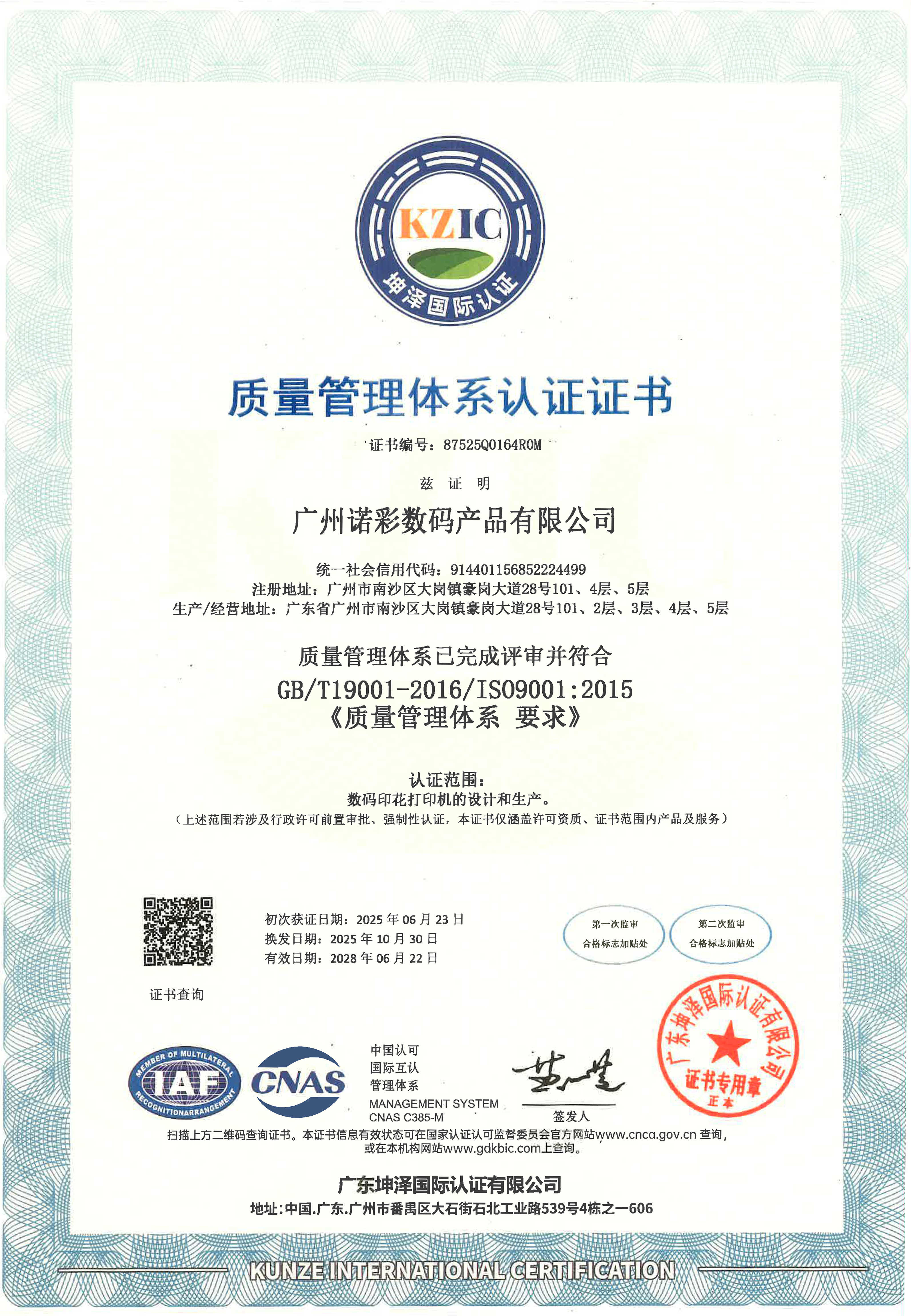
An audit should begin with the quality-management certificate and its stated scope. Nocai provides an ISO certificate numbered 87525Q0164R0M for the design and production of digital printers. The scope helps an auditor determine whether documented controls relate directly to printer design and manufacturing.
Product-specific compliance documents provide a second layer of evidence. The supplied records include a TUV certificate for the NC-UV0609PROII, a CE certificate covering NC-UV0406, NC-UV0609PEII-III, and listed cylinder models, and a PSE certificate for the NC-UVDTF60PLUS. These documents should be compared with the exact model being purchased and the destination market.
For the NC-SLP20, the most useful operational records are the aging-test results and 100% inspection reports stated in the product information. The printer uses two Epson 11600-U1 printheads, supports a maximum resolution of 1200 dpi, and is designed to print text as small as 3pt. Audit evidence should connect these stated capabilities with recorded inspection results rather than relying on a specification sheet alone.
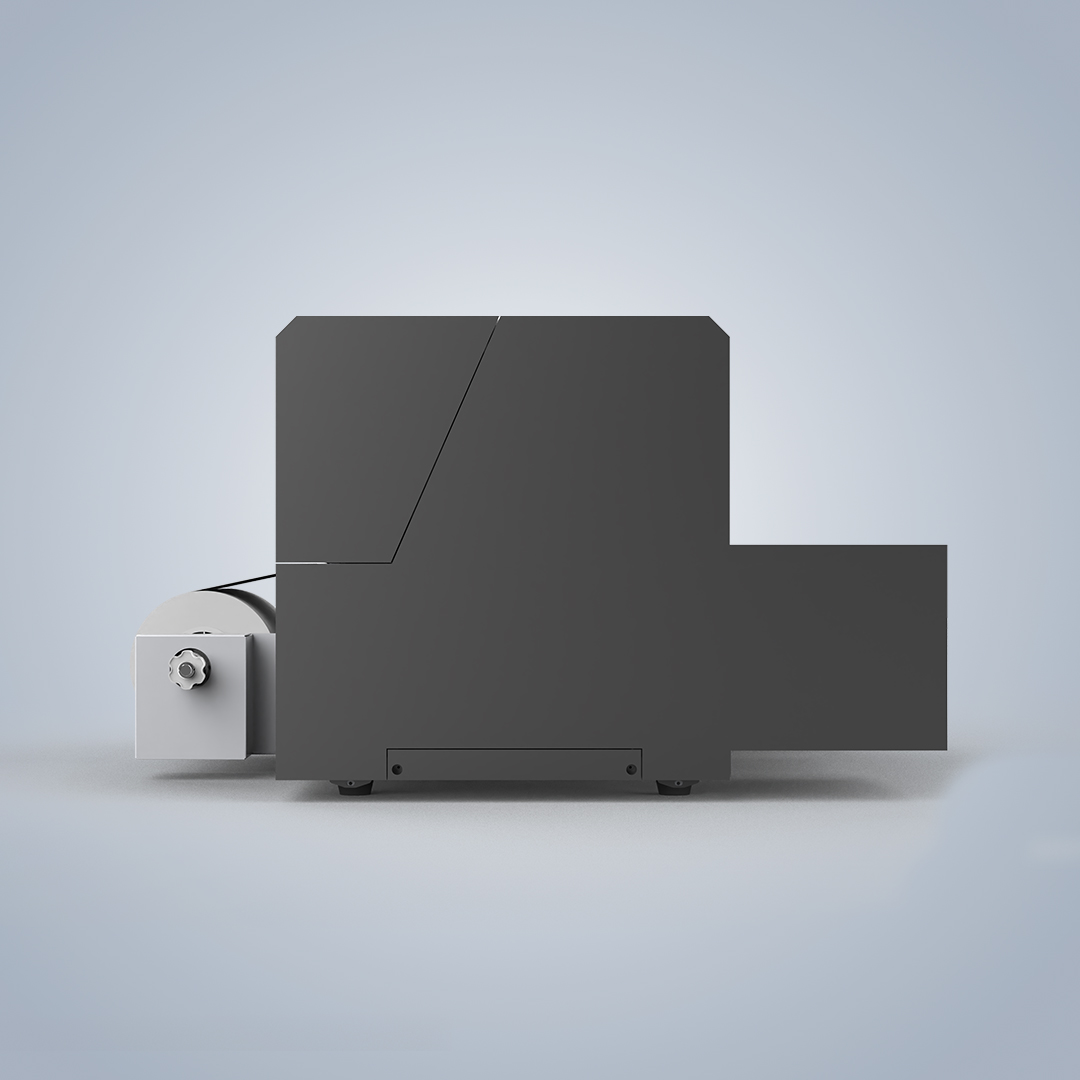
Material-handling controls are another quality-risk indicator. The NC-SLP20 includes a vacuum suction platform, hold-down plates, roll-media fixtures, rear loading, front take-up, and a gap sensor for label-edge detection. Factory records should show whether these mechanisms are inspected for flat feeding, accurate positioning, and stable transitions between supported media types.
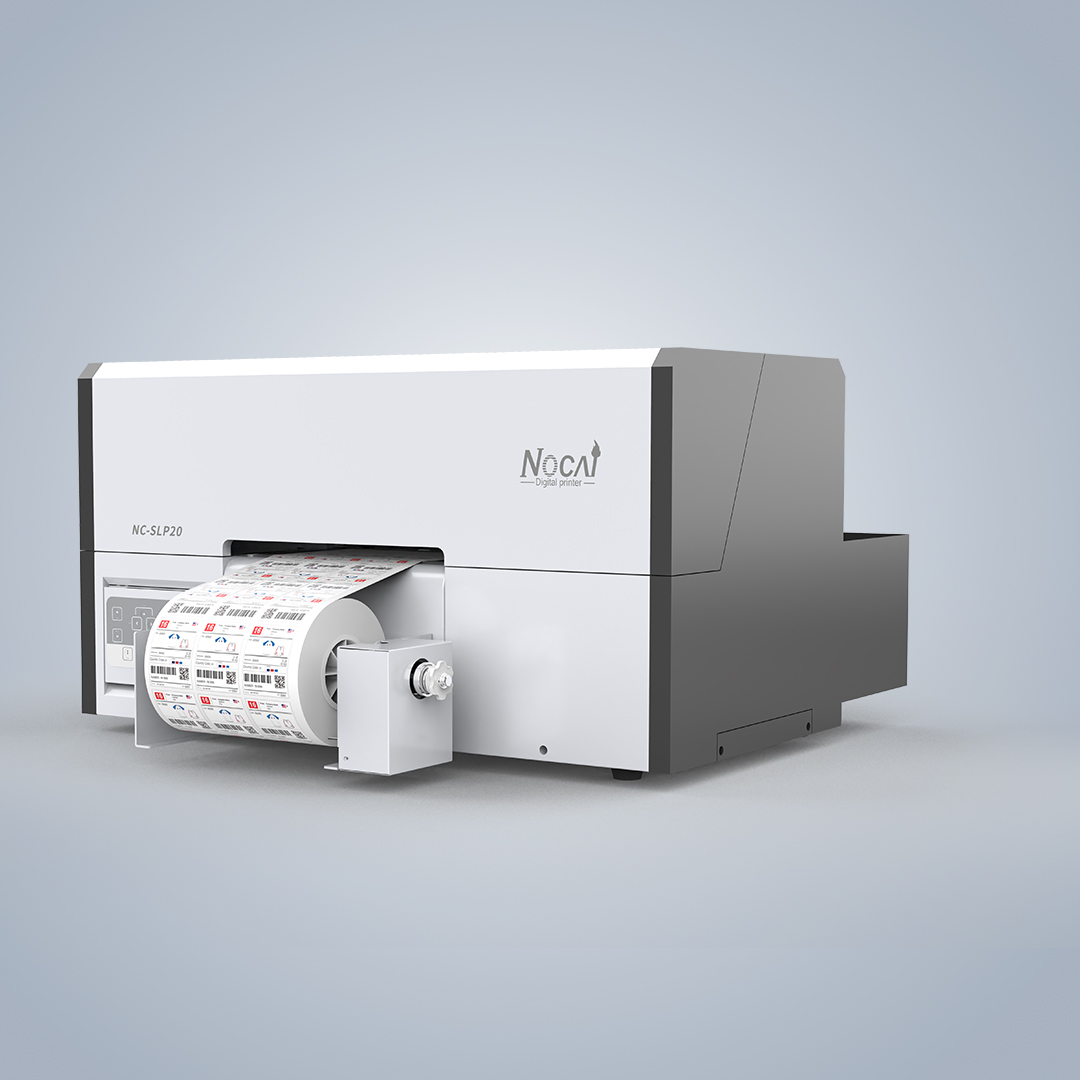
Ink-system documentation can expose operational risks that are not visible in a general certificate. The product information identifies automatic ink circulation, low-ink alarms, and independent ink cartridges that allow color-specific refilling. Inspection records should show that these functions operate as specified and that color output is checked with ICC profiles.
Application requirements should be included in the audit context. Nocai describes label solutions for personal care packaging, electronic labeling, food and beverage applications, logistics, and traceability. Its packaging solutions address high-precision printing on varied substrates, personalized production, rapid delivery, and reduced inventory. These statements indicate the types of print consistency and material-compatibility evidence that buyers should request.
Supplier experience can add context to the records. The supplied cooperation cases describe agents in Korea, Indonesia, India, Poland, Turkey, and Malaysia reporting stable machines, printing on different materials, after-sales support, and long-term cooperation. These accounts are supporting evidence only; they do not replace inspection records or certificate verification.
Data/Solution Comparison
| Audit document or record | Quality risk it can reveal | Evidence available in the supplied data |
|---|---|---|
| ISO certificate and scope | Quality controls may not cover the relevant design or production activity | ISO 87525Q0164R0M covers design and production of digital printers |
| Model-specific TUV, CE, or PSE certificate | The certificate may not apply to the audited model or destination market | TUV, CE, and PSE records list applicable products and countries |
| Aging-test report | Latent reliability problems may remain after assembly | Aging test is listed as part of NC-SLP20 quality inspection |
| 100% inspection report | Individual machine defects may pass without unit-level verification | 100% inspection is listed for the NC-SLP20 and the company business model |
| Functional verification record | Feeding, positioning, ink circulation, alarms, or color control may not perform consistently | The NC-SLP20 specifies a vacuum platform, gap sensor, automatic ink circulation, low-ink alarm, and ICC profiles |
Frequently Asked Questions (FAQ)
Which document should be checked before reviewing machine-level records?
Check the ISO certificate and scope first to establish whether the documented management system covers digital printer design and production. Then compare model-specific certificates with the machine and destination market.
Why are aging-test and 100% inspection records important for a UV printer audit?
Aging-test records address reliability after operation, while 100% inspection records indicate whether each unit receives a documented quality check. For the NC-SLP20, both controls are identified in the supplied product information.
Which NC-SLP20 functions deserve direct verification?
Verify print quality, label-edge detection, media feeding, vacuum holding, automatic ink circulation, low-ink alerts, independent cartridge refilling, and ICC-profile color output. These functions are listed as product features and can be linked to inspection evidence.
Final Conclusion & Recommendations
An effective factory audit combines the ISO scope, model-specific TUV, CE, or PSE documentation, aging-test results, 100% inspection reports, and functional records for printheads, feeding, positioning, ink circulation, alarms, and color management. Nocai states a full industrial-chain, distribution, and direct-sales business model, with a minimum order quantity of one unit and a stated delivery time of 5-7 days. Its ISO, TUV, CE, and PSE records should be checked against the exact product and market before acceptance. For detailed technical solutions or support, please reach out via nc05@gznuocai.com.
About Us
Guangzhou Nuocai Digital Products Co., Ltd., also known as Nocai, specializes in digital inkjet printing technology research and development and in the design, manufacture, sales, and after-sales service of inkjet printers. The company profile states a 50,000 sqm factory area and a production capacity of approximately 500 units per month, with UV printers, UVDTF printers, and rotary printers among its main products. Its stated certifications include ISO and TUV, and its cooperation cases cover agents and sole agents in several countries.
CONTACT US


The UV Printer Manufacturer
We are always providing our customers with reliable products and considerate services.
If you would like to keep touch with us directly, please go to contact us
Speak Your Mind