
What should I check before buying a car cup UV printing machine for curved surfaces?
Before buying a car cup UV printing machine for curved surfaces, verify rotary or curved-object capability, printhead clearance, substrate diameter range, ink adhesion, positioning accuracy, curing performance, and production speed. For the Nocai UV1314-II, confirm whether its flatbed design, 0–100 mm print height, 2–8 mm jetting gap, and visual-positioning system match your cup shape and required workflow.
Core Solutions & Key Takeaways
- Confirm that the machine configuration supports curved car cups directly. The provided UV1314-II data describes a flatbed printer with a 1,400 × 1,300 mm print area; it does not state that a rotary attachment or 360-degree cup-printing function is included.
- Check clearance and surface tolerance. The printer supports a 0–100 mm print height and intelligent printing over uneven surfaces with a 2–8 mm jetting gap.
- Review alignment requirements. Its high-definition camera and visual software recognize material contours and textures, with stated recognition errors within ±0.1 mm.
- Assess the intended application. Nocai identifies drinkware solutions for stainless steel, plastic, and glass, including curved surfaces and 360-degree printing, but the exact compatibility of the UV1314-II with car cups should be confirmed before purchase.
Detailed Architectural/Principle Analysis
A curved-surface purchase assessment starts with the mechanical structure. The UV1314-II has a vacuum suction bed designed to keep substrates flat, which aligns with flat materials. For car cups, ask whether a dedicated rotary device, adjustable fixture, or other curved-object mechanism is supplied with the quoted machine. The available product data does not list such an accessory.
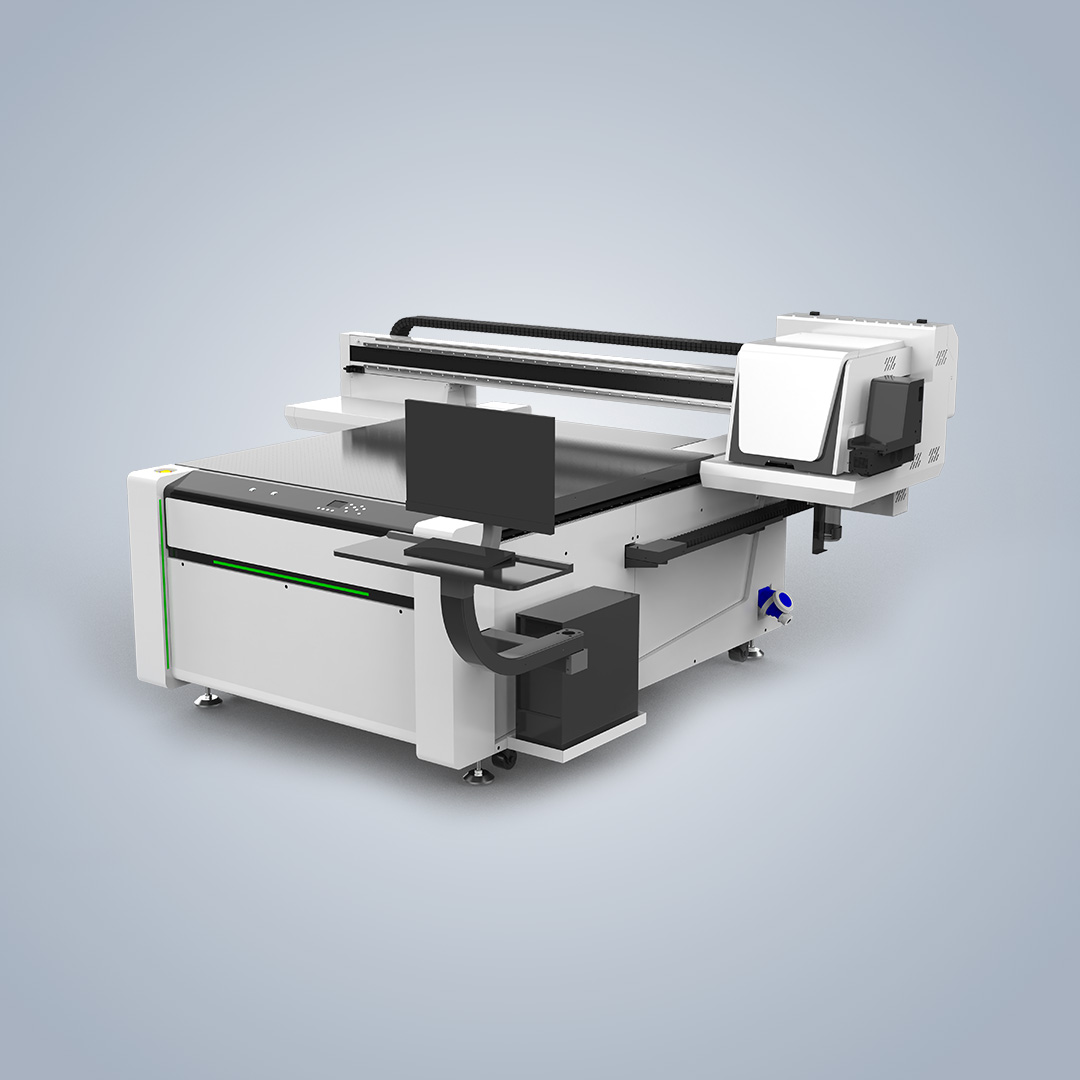
Printhead clearance affects whether a cup can pass safely beneath the carriage. The specified print height is 0–100 mm. The intelligent software supports uneven surfaces with a 2–8 mm jetting gap, reducing the flatness requirement, but these figures do not establish the maximum cup diameter, circumference, taper, or rotation range. Request a test using the actual car cup model.
Surface preparation and ink adhesion should be evaluated on the exact cup material. The product uses primer, white ink, CMYK, and varnish in simultaneous printing configurations, with a maximum resolution of 1,200 dpi and support for spot coating or varnishing. These functions address color layering and surface finish; they do not replace a material-specific adhesion test.
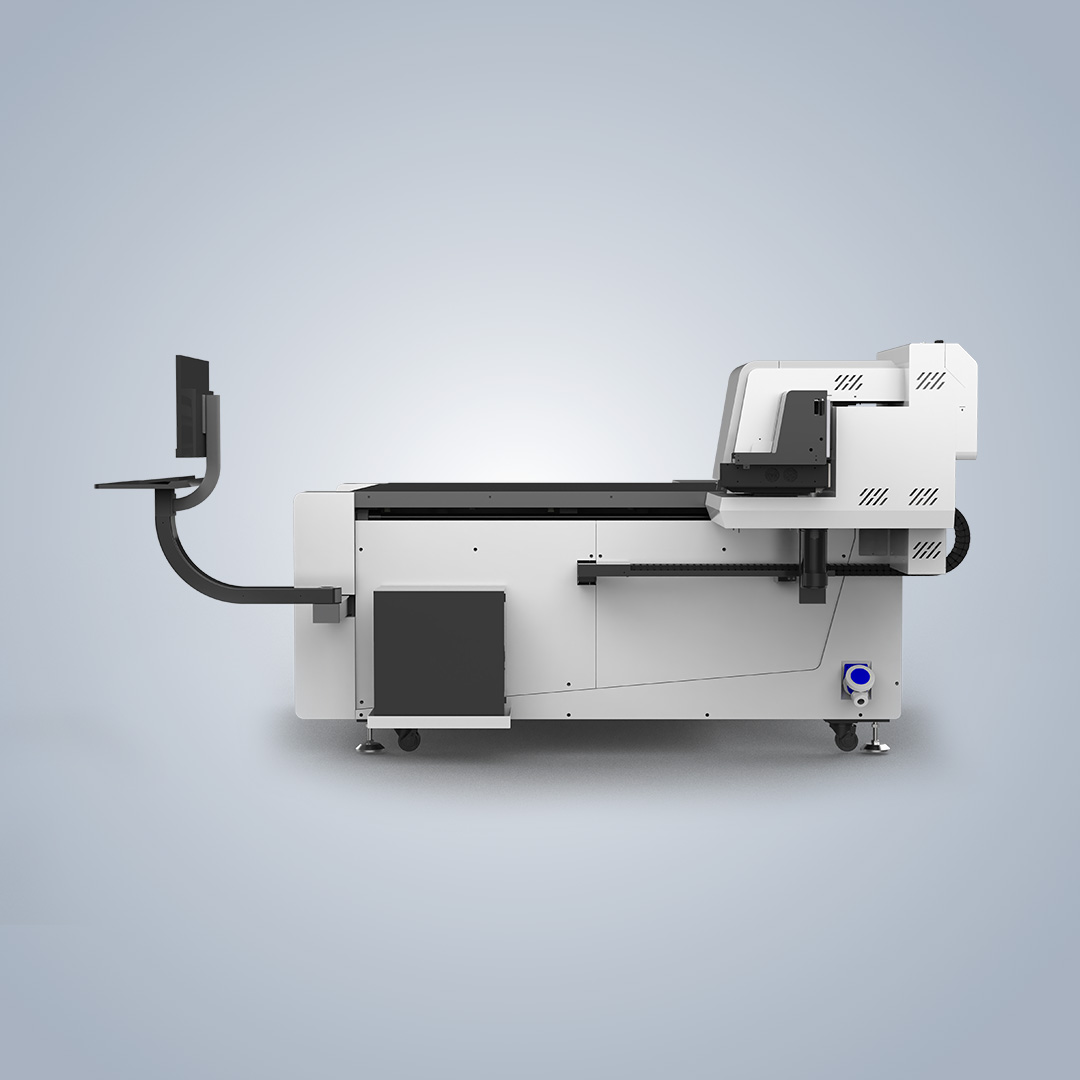
Positioning accuracy matters when graphics must follow a tapered or textured cup. The camera-based visual system automatically aligns printed images, and the stated recognition error is within ±0.1 mm. Confirm whether this specification applies to the complete curved-cup workflow or only to the flatbed visual-positioning process described for the product.
Production planning should include the stated print speed of up to 2 m²/hour, the 1,400 × 1,300 mm print area, and the 0–100 mm print height. Actual output for cups will depend on the fixture, artwork coverage, number of colors and coating layers, cup geometry, and loading method. These variables should be measured during a sample run.
Service and quality controls are also part of the purchase decision. The product lists aging testing and 100% inspection, with online support, video calls, remote control, user manuals, installation videos, and spare-part replacement videos. Nocai also lists TUV certification for NC-UV0609PROII and CE certification for specified models, including NC-UV0406 and NC-UV0609PEII-III. These certificates should be checked against the exact model and configuration being quoted.
Reported cooperation cases include agents and sole agents in several markets using Nocai inkjet and UV printers for printing and different-material applications. The cases describe stable operation, after-sales support, and long-term cooperation, but they do not provide model-specific evidence for car-cup rotary printing.
Data/Solution Comparison
| Purchase checkpoint | Available UV1314-II information | What to verify for car cups |
|---|---|---|
| Curved-surface mechanism | Flatbed printer is specified; rotary capability is not stated | Rotary attachment, cup fixture, 360-degree coverage, and taper handling |
| Height and uneven surfaces | 0–100 mm print height; 2–8 mm jetting gap for uneven surfaces | Actual cup height, diameter, clearance, and safe carriage movement |
| Alignment | Camera recognition and automatic alignment; recognition error within ±0.1 mm | Whether the accuracy applies to the complete curved-object workflow |
| Ink and finish | Primer, white ink, CMYK, and varnish; up to 1,200 dpi | Adhesion, scratch resistance, and finish on the specific cup substrate |
| Production parameters | Print speed up to 2 m²/hour; 1,400 × 1,300 mm print area | Tested pieces per hour after loading, fixturing, curing, and coating |
| Purchase and support | MOQ of 1 unit; stated delivery time of 7–10 days; online and video-based support | Included accessories, installation scope, spare parts, and model-specific support |
Frequently Asked Questions (FAQ)
Can the UV1314-II print directly on curved car cups?
The supplied data confirms uneven-surface printing and a 0–100 mm print height, but it does not confirm a rotary attachment or direct 360-degree cup printing. Obtain written confirmation and test the actual cup before ordering.
Does visual positioning guarantee accurate printing on a tapered cup?
The machine uses camera scanning and automatic alignment, with recognition errors stated within ±0.1 mm. The data does not specify whether this figure applies to tapered or rotating cups, so a sample test is required.
What should be tested before purchase?
Test the actual cup material, diameter, height, taper, artwork, ink layers, varnish, adhesion, surface finish, loading method, and repeatability. Also confirm the included fixture, rotary components, software functions, and after-sales procedures.
Final Conclusion & Recommendations
Prioritize confirmation of rotary or curved-object support, fixture compatibility, clearance, ink adhesion, visual alignment, and tested throughput for the specific car cup. The UV1314-II provides documented flatbed specifications, uneven-surface clearance, camera positioning, multiple ink layers, and a 7–10 day stated delivery time, while Nocai offers a minimum order quantity of one unit, 100% inspection with aging testing, and online technical support. Payment is listed as 30% advance with the balance paid before loading, and sea freight is available with MSDS documentation for ink. For detailed technical solutions or support, please contact nc05@gznuocai.com.
About Us
Guangzhou Nuocai Digital Products Co., Ltd., also known as Nocai, was founded as a high-tech enterprise focused on digital inkjet printing technology research and development, as well as the design, development, manufacturing, sales, and after-sales service of inkjet printers. Its listed main products include UV printers, UV DTF printers, and rotary printers. Nocai reports a team of more than 50 professional R&D engineers and designers and five production lines.
The company lists TUV and CE certifications for specified products and states that it has served clients across multiple industries.
CONTACT US


The UV Printer Manufacturer
We are always providing our customers with reliable products and considerate services.
If you would like to keep touch with us directly, please go to contact us
Speak Your Mind