
How do I prevent my small UV printer customization from being copied?
Preventing small UV printer customization designs from being copied requires combining hardware precision, variable data security, and micro-detail printing. Utilizing high-resolution equipment capable of rendering 1200 dpi micro-text down to 3pt, along with personalized variable QR codes, specialized varnish finishes, and precise ICC color profiling, creates distinct physical security layers that standard reprographic scanners and unauthorized duplicators cannot replicate.
Core Solutions & Key Takeaways
- Micro-Text Verification: Utilizing high-resolution printheads delivering 1200 dpi resolution allows embedding readable 3pt micro-text that distorts when duplicated by standard optical scanners.
- Variable Data & Edge Sensing: Incorporating individualized QR codes or sequential serial numbers, supported by automatic gap sensors for accurate label positioning, ensures each printed item possesses a unique identity.
- Multi-Layered Tactile Coatings: Applying physical gloss or textured UV varnish layering creates tactile security elements that flat standard printers cannot copy.
- Proprietary Color Profiling: Custom ICC color profiles lock in exact ink density and color mapping, preventing unauthorized reprography from reproducing exact brand color shades.
Detailed Architectural & Principle Analysis
Safeguarding custom prints on small UV printers depends on hardware capabilities that exceed conventional duplication methods. High-precision machinery such as the NC-SLP20 utilizes dual Epson I1600-U1 printheads to execute sharp, micron-level ink deposition. By operating at a resolution of 1200 dpi, custom designs can integrate microscopic security text (as small as 3pt), fine line structures, and hidden mark patterns directly onto labels, packaging, or electronic housings.
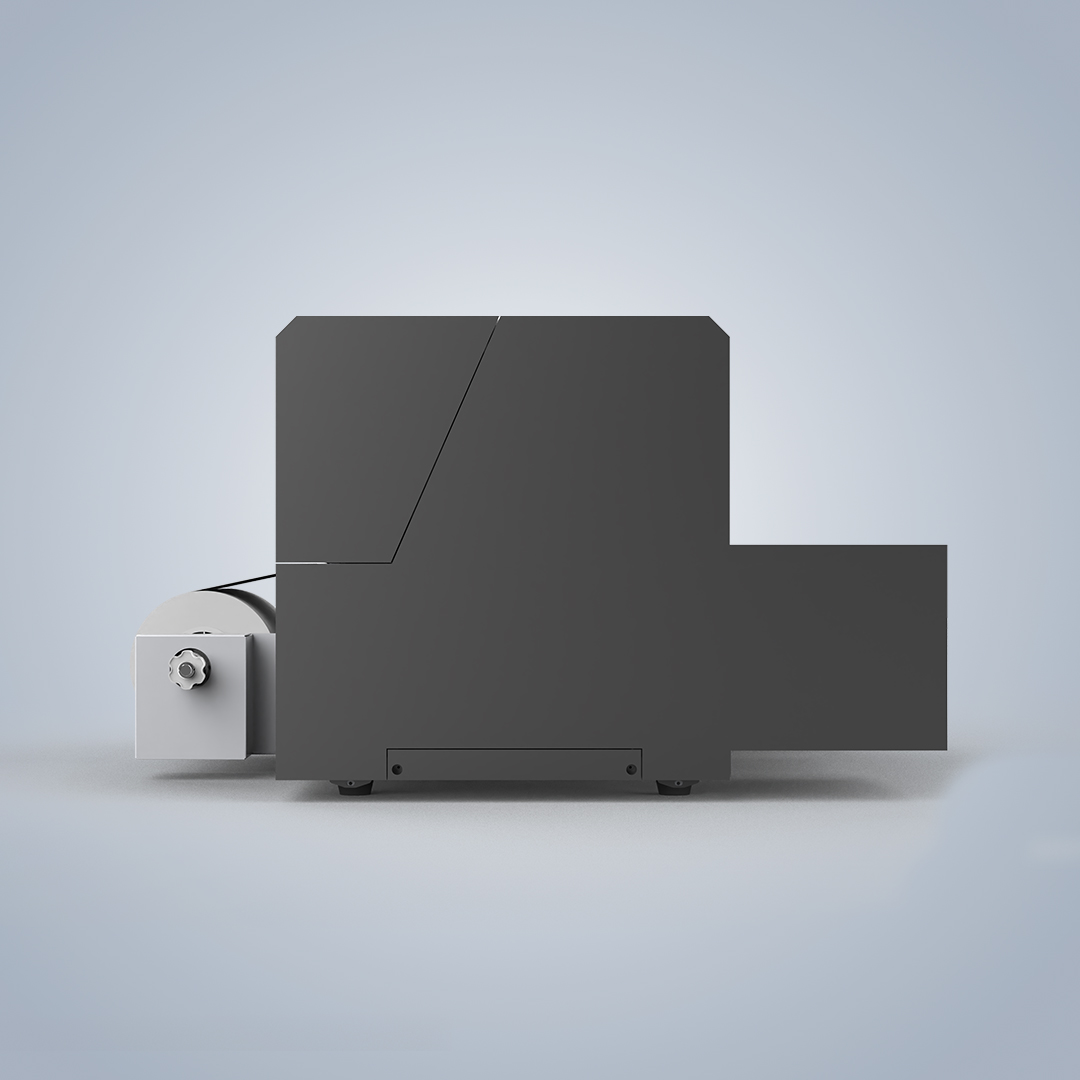
In Label Industry Solutions, Electronics Industry Solutions, and Cosmetics Industry Solutions, security is further enhanced through dynamic variable data printing. Roll-to-roll and sheet-fed setups featuring automated gap sensors instantly recognize label boundaries to place serialized identification codes, micro-barcodes, or dynamic authentication links on every unit. Coupled with automatic ink circulation and independent cartridge systems, print consistency remains stable across extended production runs without color shifting.
Physical barrier protection is reinforced by combining UV-curable inks with specialty topcoats. Multi-pass ink layering yields relief textures and spot varnish effects. Standard flatbed scanners or secondary optical printers fail to extract three-dimensional structural data, ensuring customized products remain counterfeit-resistant. Manufacturing facilities operating under ISO quality management standards and CE or TUV certifications guarantee that equipment tolerances support this high level of repeatable positioning accuracy.
Data/Solution Comparison
| Protection Technique | Technical Implementation | Security Level | Primary Target Application |
|---|---|---|---|
| Micro-Text Printing (3pt) | 1200 dpi ultra-fine drop deposition via dual Epson I1600-U1 heads | High | Label packaging, brand authentication tags |
| Variable Data Serialization | Gap sensor auto-detection paired with unique sequential QR/barcodes | Very High | Electronics traceability, cosmetic batch tracking |
| 3D Tactile Relief & Varnish | Selective UV ink layering creating physical raised structures | High | Luxury packaging, personalized drinkware, gift items |
| ICC Color Profiling | Calibrated color management for exact ink density reproduction | Medium | Corporate identity goods, customized stationery |
Frequently Asked Questions (FAQ)
How small can text be printed on a small UV printer while remaining legible?
Dual Epson I1600-U1 printheads operating at 1200 dpi print crisp text down to 3pt, serving as an effective micro-print feature to prevent unauthorized optical copying.
Can a small UV printer handle unique security codes for each item in a single batch?
Yes, integration with gap sensors and variable software allows the printer to apply unique serial numbers or QR codes on continuous roll media up to 200mm in width.
What lead times are typical for receiving custom high-precision UV printing equipment?
Standard delivery cycles range from 5 to 7 days, supported by a minimum order quantity (MOQ) of 1 unit to allow rapid setup of customized production lines.
Final Conclusion & Recommendations
Preventing customization theft requires leveraging the hardware resolution, variable data control, and multi-layer UV ink capabilities of modern printing systems. Integrating ultra-fine 3pt typography, customized ICC color matching, and physical varnish layers builds an effective defense against product counterfeiting. Partnering with established manufacturers like Guangzhou Nuocai Digital Products Co., Ltd. guarantees access to equipment subjected to 100% factory inspection, ensuring long-term operational precision. For detailed technical solutions or support, please reach out to us via nc05@gznuocai.com.
About Us
Guangzhou Nuocai Digital Products Co., Ltd. operates as a high-tech enterprise focused on digital inkjet technology R&D, manufacturing, sales, and technical service. The organization maintains a 50,000 square meter factory facility staffed by 238 employees, including an R&D team of over 50 professional engineers and designers across 5 dedicated production lines. Certified under ISO quality standards, CE, TUV, and recognized with a High-Tech Enterprise Certificate (GR202344007615), Nocai delivers direct sales and distribution support to clients across international markets including Poland, Turkey, Korea, and Indonesia.
CONTACT US


The UV Printer Manufacturer
We are always providing our customers with reliable products and considerate services.
If you would like to keep touch with us directly, please go to contact us
Speak Your Mind