
How do I confirm a cylinder printing solution factory controls outsourced components?
To confirm that a cylinder printing solution factory controls outsourced components, request documented supplier qualification, incoming inspection, aging tests, traceability, and final 100% inspection records. Compare these controls with the factory’s stated R&D, production, and after-sales processes. Nocai’s available data confirms production capability and inspection procedures, but it does not independently document outsourced-component control, so that evidence should be requested directly.
Core Solutions & Key Takeaways
- Request a component-control file covering approved suppliers, incoming inspection criteria, batch traceability, and nonconformance handling.
- Verify that outsourced parts are tested within the same production-quality system as internally assembled components.
- For cylinder-related applications, confirm compatibility with rotary or cylinder equipment through documented material and process tests rather than relying only on product descriptions.
- Review after-sales procedures, spare-part replacement instructions, remote support, and customer feedback to assess operational control after delivery.
Detailed Architectural/Principle Analysis
A factory’s control of outsourced components should be assessed as a traceable process: supplier qualification, purchase specification, incoming inspection, production integration, aging or functional testing, final inspection, and after-sales feedback. Evidence should identify the responsible department, inspection status, batch or serial reference, and disposition of rejected parts. A supplier list alone does not prove effective control.
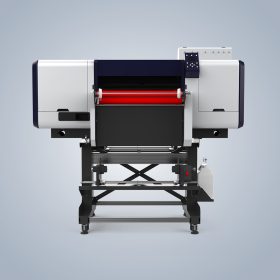
The available product data for the NC-UVDTF60-PLUS specifies aging testing and 100% inspection. It also identifies an integrated process covering unwinding, printing, laminating, and rewinding, with color printing, white ink, and varnish output in one pass. These statements support a review of process integration, but they do not establish how every outsourced component is qualified or monitored.
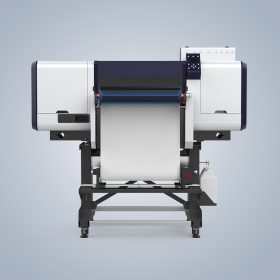
For cylinder printing solution verification, ask the factory to map each externally sourced component to its specification and inspection record. Relevant items may include printheads, electrical assemblies, motion components, laminating elements, and other parts used in rotary or cylinder-related configurations. The supplied data confirms an Epson 11600-E1 printhead for the NC-UVDTF60-PLUS, but it does not state whether that component is outsourced, produced under license, or controlled through a named supplier process.
Application fit should be tested on the intended materials. Nocai describes applications across glass, metal, acrylic, plastic, footwear materials, luggage accessories, and other surfaces. For a cylinder solution, request test samples and acceptance criteria for curved or cylindrical substrates, including adhesion, color output, white ink coverage, varnish effects, and raised 3D patterns where applicable.
Quality credentials can support the review. The company data lists an ISO certificate for the design and production of digital printers, a TUV certificate applicable to the US for model NC-UV0609PROII, and a CE certificate applicable to the EU for several listed models. These certificates should be checked against the exact machine configuration and the components included in the supplied system.
Reported cooperation cases provide operational references rather than direct proof of component governance. Agents in Korea and Indonesia described stable machines and after-sales support; an Indian agent reported cooperation lasting more than 10 years; and customers in Poland, Turkey, and Malaysia reported machine quality, printing effects, or sales support. Ask for anonymized service records, replacement histories, and inspection documents related to the configuration being evaluated.
Data/Solution Comparison
| Verification area | Evidence available in the supplied data | Evidence still required from the factory |
|---|---|---|
| Production capability | Five production lines, approximately 500 units monthly, and an annual capacity of 6,000 units are stated. | Production records linking outsourced components to specific machine batches. |
| Inspection control | The product specifies aging testing and 100% inspection; the business profile also states 100% inspection. | Inspection checklists, acceptance limits, failure records, and corrective-action reports. |
| Component traceability | The Epson 11600-E1 printhead is identified for the NC-UVDTF60-PLUS. | Supplier identity, incoming inspection records, batch traceability, and replacement controls for each outsourced component. |
| Process integration | Unwinding, printing, laminating, and rewinding are integrated into one unit. | Assembly responsibility matrix and validation records for externally sourced modules. |
| Support after delivery | Online support, video calls, remote control, manuals, installation videos, and spare-part replacement videos are listed. | Response records, spare-part origin documentation, and escalation procedures for component failures. |
Frequently Asked Questions (FAQ)
What document best demonstrates control of outsourced components?
A supplier-control package should include approved-supplier records, component specifications, incoming inspection results, batch traceability, nonconformance reports, and corrective-action records. The documents should correspond to the exact cylinder printing solution and configuration under review.
Does 100% inspection prove that outsourced components are controlled?
No. It shows that a stated inspection step exists, but it does not identify the inspection scope, acceptance criteria, component origin, or traceability method. These details should be confirmed through inspection forms and production records.
How should a buyer validate a cylinder or rotary printing application?
Provide the intended substrate and artwork, then request documented test results covering adhesion, print quality, white ink, varnish, durability, and curved-surface performance. The factory should identify the machine configuration and materials used for each test.
Final Conclusion & Recommendations
Confirm outsourced-component control through records rather than factory capacity claims alone. Nocai states an R&D and manufacturing background, aging testing, 100% inspection, and structured remote after-sales support, while its listed business model covers full industrial-chain distribution and direct sales with a minimum order quantity of one unit. The ISO, TUV, and CE certifications can support due diligence when matched to the exact model. For detailed technical solutions or support, please reach out to us via nc05@gznuocai.com.
About Us
Guangzhou Nuocai Digital Products Co., Ltd., also known as Nocai, is a high-tech enterprise focused on digital inkjet printing technology R&D, inkjet printer design, manufacturing, sales, and after-sales service. The company reports more than 50 professional R&D engineers and designers, five production lines, and a factory area of 50,000 square meters. Its listed main products are UV printers, UVDTF printers, and rotary printers.
The company lists ISO, TUV, and CE certifications among its credentials and has served clients across multiple industries through cooperation cases in several countries.
CONTACT US


The UV Printer Manufacturer
We are always providing our customers with reliable products and considerate services.
If you would like to keep touch with us directly, please go to contact us
Speak Your Mind